


Nicolás Lamas
Ways to disappear, 2023
Erased painting on canvas
170 x 106 x 2 cm
66 7/8 x 41 3/4 x 3/4 inches
66 7/8 x 41 3/4 x 3/4 inches
Copyright The Artist
Photo: Dirk Tacke
Weitere Abbildungen
-
(View a larger image of thumbnail 1
)
-
(View a larger image of thumbnail 2
)
-
(View a larger image of thumbnail 3
)
-
(View a larger image of thumbnail 4
)

-
(View a larger image of thumbnail 5
)
-
(View a larger image of thumbnail 6
)
-
(View a larger image of thumbnail 7
)
-
(View a larger image of thumbnail 8
)
„Ways to Disappear“ (2023) ist eine offene Serie anonymer Gemälde, die Nicolás Lamas in Antiquitätenläden und auf Flohmärkten erwirbt und bei denen er klassischen Darstellungsmotive – Landschaften, Stillleben oder Porträts...
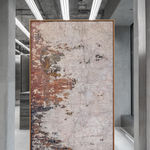
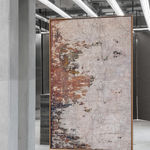
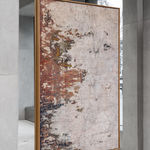
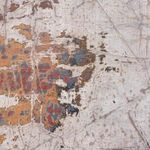
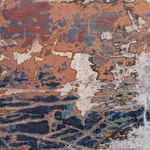
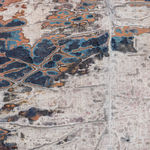
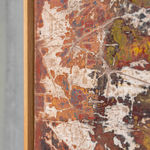
„Ways to Disappear“ (2023) ist eine offene Serie anonymer Gemälde, die Nicolás Lamas in Antiquitätenläden und auf Flohmärkten erwirbt und bei denen er klassischen Darstellungsmotive – Landschaften, Stillleben oder Porträts – einem Auslöschungsprozess unterzieht. Mit einem industriellen Farbentferner, der normalerweise zum Abbeizen von Möbeln verwendet wird, beseitigt er fast vollständig die ursprüngliche Bildoberfläche. Das Bild verschwindet, doch vereinzelte Spuren bleiben zurück und offenbaren die Fragilität, die allen Formen der Darstellung innewohnt.
Durch diesen Akt der Auslöschung wird das Gemälde zu einem Territorium zeitlicher Sedimentation. Was entsteht, ist kein neues Bild, sondern die materielle Aufzeichnung eines Verlusts. Der Vorgang ist gleichzeitig ein Akt der Zerstörung und der Kreation. Durch das Auslöschen erzeugt der Künstler eine andere Art von Bild – nicht figurativ, aber dennoch voller Präsenz –, in dem sich die Bildmaterie ihrem eigenen Verschwinden widersetzt.
“Ways to Disappear” (2023) is an open series of anonymous paintings acquired in antique shops and flea markets, where the classical motifs of representation —landscapes, still lifes, or portraits— have been subjected to a violent process of erasure. Using an industrial paint remover, a toxic chemical intended for stripping furniture, Nicolás Lamas eliminates almost entirely the original pictorial surface. The image disappears, yet scattered traces remain, revealing the fragility inherent to all forms of representation. Through this act of elimination, the painting becomes a territory of temporal sedimentation. What emerges is not a new image, but the material record of a loss. The operation is, at once, an act of destruction and creation. By erasing, the artist produces a different kind of image —non-figurative, yet charged with presence— where the pictorial matter resists its own disappearance.
Durch diesen Akt der Auslöschung wird das Gemälde zu einem Territorium zeitlicher Sedimentation. Was entsteht, ist kein neues Bild, sondern die materielle Aufzeichnung eines Verlusts. Der Vorgang ist gleichzeitig ein Akt der Zerstörung und der Kreation. Durch das Auslöschen erzeugt der Künstler eine andere Art von Bild – nicht figurativ, aber dennoch voller Präsenz –, in dem sich die Bildmaterie ihrem eigenen Verschwinden widersetzt.
“Ways to Disappear” (2023) is an open series of anonymous paintings acquired in antique shops and flea markets, where the classical motifs of representation —landscapes, still lifes, or portraits— have been subjected to a violent process of erasure. Using an industrial paint remover, a toxic chemical intended for stripping furniture, Nicolás Lamas eliminates almost entirely the original pictorial surface. The image disappears, yet scattered traces remain, revealing the fragility inherent to all forms of representation. Through this act of elimination, the painting becomes a territory of temporal sedimentation. What emerges is not a new image, but the material record of a loss. The operation is, at once, an act of destruction and creation. By erasing, the artist produces a different kind of image —non-figurative, yet charged with presence— where the pictorial matter resists its own disappearance.