


Gary Kuehn
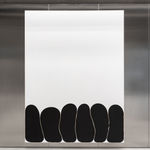
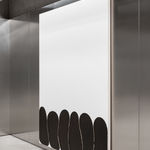
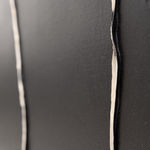
Black Painting, 1971
Acrylic on canvas
249 x 183 x 4.5 cm
98 x 72 x 1 3/4 inches
98 x 72 x 1 3/4 inches
Copyright The Artist
Photo: Dirk Tacke
Further images
-
(View a larger image of thumbnail 1
)
-
(View a larger image of thumbnail 2
)
-
(View a larger image of thumbnail 3
)
-
(View a larger image of thumbnail 4
)
-
(View a larger image of thumbnail 5
)

-
(View a larger image of thumbnail 6
)

-
(View a larger image of thumbnail 7
)

-
(View a larger image of thumbnail 8
)
Seit 1969 entwickelte Gary Kuehn mit der Serie „Black Paintings“ über Jahrzehnte eine Werkgruppe, in der er das Verhältnis zwischen Leinwand und Sujet grundlegend befragt. Die Leinwand ist für ihn...
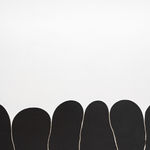
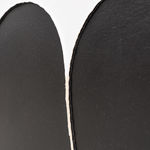
Seit 1969 entwickelte Gary Kuehn mit der Serie „Black Paintings“ über Jahrzehnte eine Werkgruppe, in der er das Verhältnis zwischen Leinwand und Sujet grundlegend befragt. Die Leinwand ist für ihn kein neutrales Bildfeld, sondern ein aktiver Raum, in dem sich Material, Form und Struktur gegenseitig beeinflussen. Er versteht die „Black Paintings“ als skulpturale Interpretation der Malerei – weniger gemalt als gemacht. Kuehn gießt Acrylfarbe in vorgefertigte, kreisförmige Schablonen und passt diese an das rechteckige Format der Leinwand an. Dadurch geraten diese in Bewegung, werden gegeneinander gedrängt und verlieren ihre geometrische Regelmäßigkeit. So entsteht eine sichtbare Spannung zwischen Ordnung und Deformation, zwischen Kontrolle und Eigenleben des Materials. Das vorgegebene Bildformat zwingt die Formen zur Anpassung, während die Farbe zugleich ihre Autonomie behauptet. Die körperliche und wandelbare Präsenz des Materials verweist auf das Verhältnis von Kontrolle und Freiheitsstreben, von Autorität und Widerstand. Die Leinwand schließt die Kreisformen regelrecht ein und zwingt sie zur Anpassung durch Formveränderung und zeigt das stets wiederkehrende Thema vom Verhältnis zwischen Kontrolle und Freiheitsstreben in Kuehns Werken.
Since 1969, Gary Kuehn has been developing a series of works entitled “Black Paintings” in which he fundamentally questions the relationship between canvas and subject matter. For him, the canvas is not a neutral image field, but an active space in which material, form, and structure influence each other. He understands the “Black Paintings” as a sculptural interpretation of painting—less painted than made. Kuehn pours acrylic paint into prefabricated circular stencils and adapts them to the rectangular format of the canvas. This sets them in motion, pushing them against each other and causing them to lose their geometric regularity. The result is a visible tension between order and deformation, between control and the material's own life. The predetermined image format forces the forms to adapt, while the paint asserts its autonomy. The physical and changeable presence of the material refers to the relationship between control and the pursuit of freedom, between authority and resistance. The canvas literally encloses the circular forms, forcing them to adapt by changing shape, and reveals the recurring theme of the relationship between control and the pursuit of freedom in Kuehn's works.
Since 1969, Gary Kuehn has been developing a series of works entitled “Black Paintings” in which he fundamentally questions the relationship between canvas and subject matter. For him, the canvas is not a neutral image field, but an active space in which material, form, and structure influence each other. He understands the “Black Paintings” as a sculptural interpretation of painting—less painted than made. Kuehn pours acrylic paint into prefabricated circular stencils and adapts them to the rectangular format of the canvas. This sets them in motion, pushing them against each other and causing them to lose their geometric regularity. The result is a visible tension between order and deformation, between control and the material's own life. The predetermined image format forces the forms to adapt, while the paint asserts its autonomy. The physical and changeable presence of the material refers to the relationship between control and the pursuit of freedom, between authority and resistance. The canvas literally encloses the circular forms, forcing them to adapt by changing shape, and reveals the recurring theme of the relationship between control and the pursuit of freedom in Kuehn's works.
1
of
15